
Ancient Egyptian Faience Necklace
Ancient Egyptian Faience Necklace
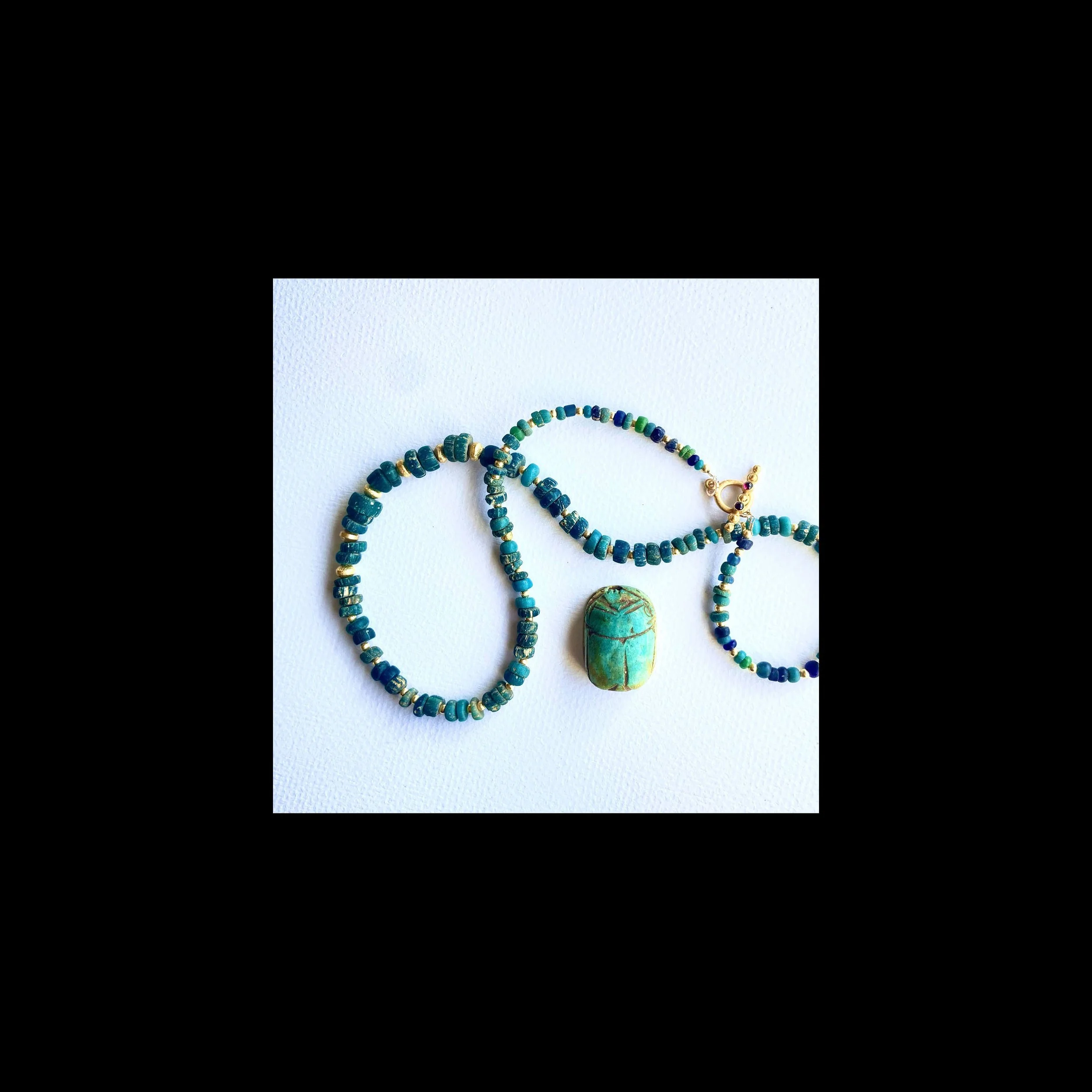
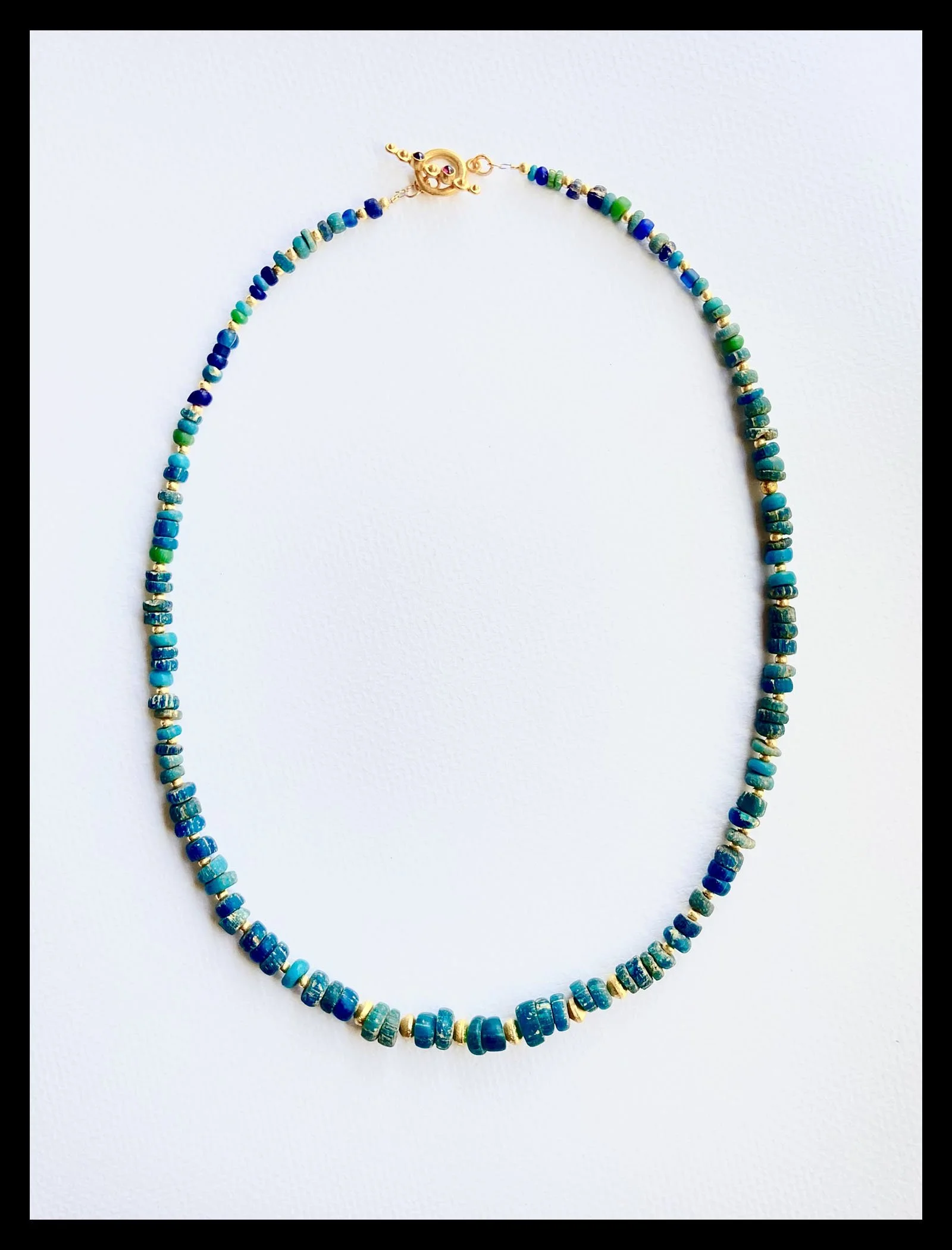
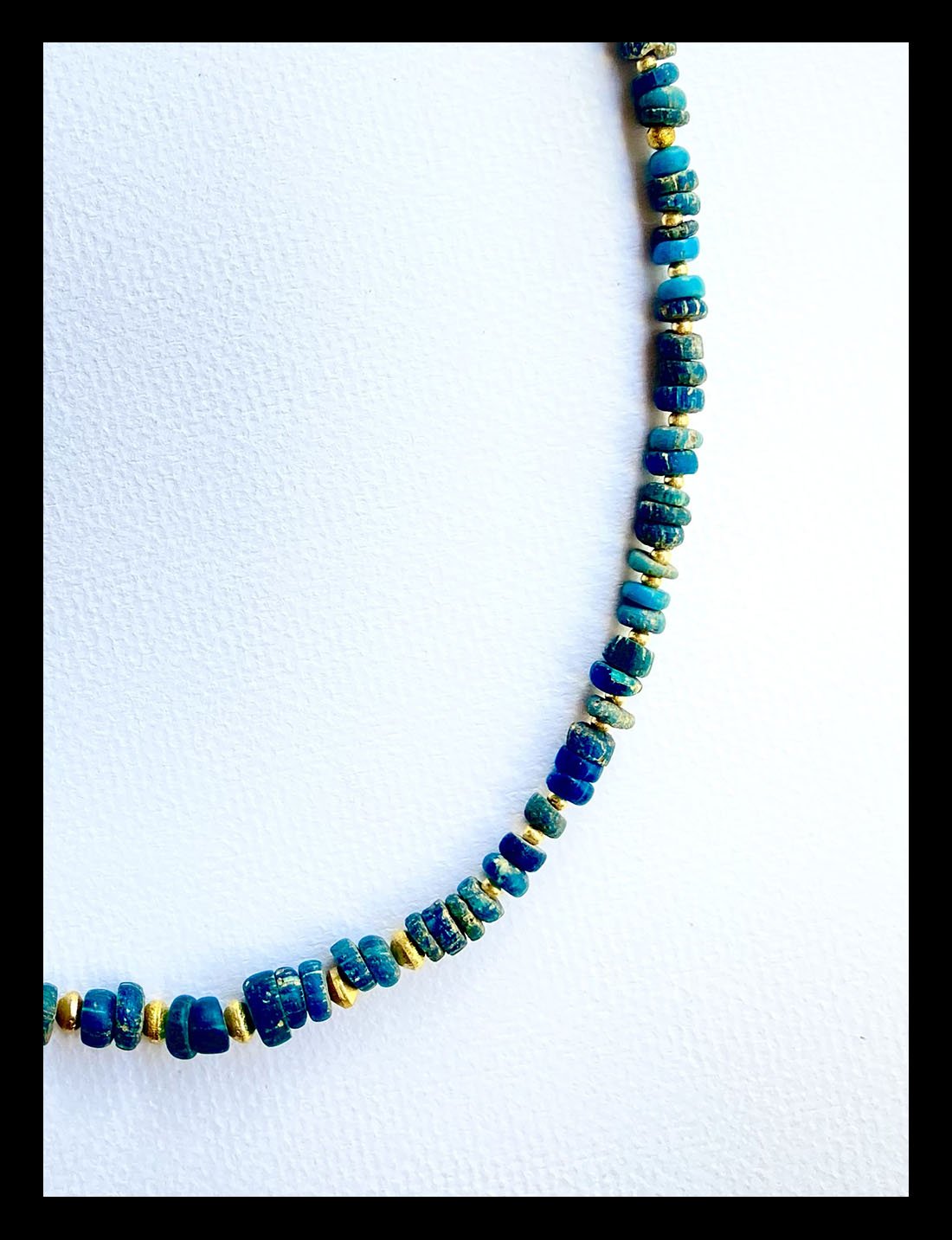
These beads are literally about 3,000 years old. Extremely nice colors that didn’t fade with time. They must have been kept away from the elements. In other wards they are in great ‘shape’ for something as old as these are. The necklace has some matte gold beads in a tight pattern that seems to be married to the faience.
As usual, I’ve had them forever………since the 1980’s. I have treasured them and hope they find a home with as much reverence as they have with me.
I used a matte gold over sterling silver toggle clasp with garnets set in the T bar.
This is an AI summery of Faience. Exhaustive but interesting.
Egyptian faience
Egyptian faience is a non-clay, silica-based ceramic material used extensively in ancient Egypt for beads, amulets, inlays, small vessels, and figurines. Despite the name, faience is not a true faience (as understood in later European tin-glazed pottery) but a self-glazing, sintered quartz body that produces a bright, glassy surface in shades of blue, green, turquoise, and occasionally other colors.
Composition and production
Core materials: crushed quartz or sand (silica), small amounts of lime (calcium compounds), and an alkali flux (plant ash or natron). Colorants—most commonly copper compounds—produce the characteristic blue-to-green palette.
Binding and shaping: Early faience objects were modeled by hand, molded, or wound on a core. Beads and amulets were typically formed from a paste of crushed quartz and binders.
Surface application: Three principal techniques were used to create the glazed surface:
Application glazing: a slurry or pigment-rich coating (glaze) applied to the shaped object before firing.
Internal glazing (self-glazing or efflorescence): soluble salts mixed into the paste migrate to the surface during drying and firing, forming a glazed layer without a separate coating.
Cementation glazing…. objects were buried in a glazing powder or buried in a kiln atmosphere that provided the necessary salts to form the glaze during firing.
Firing: Faience was fired at moderate temperatures (roughly 800–1000°C). The process vitrified the surface layer while leaving the body porous and relatively lightweight.
Aesthetic and symbolic significance
Color and symbolism: The vibrant blues and greens were associated with regeneration, life, water, and the Nile—symbols particularly tied to rebirth and protection. Turquoise and deep blue hues echoed the colors of lapis lazuli and turquoise, prized materials that faience could imitate affordably.
Use and context: Faience items appear throughout Egyptian material culture—funerary goods, personal adornment, temple ex-votos, and household objects. They were popular from the Predynastic period (before 3100 BCE) through the Roman period, reaching notable refinement during the Middle Kingdom and New Kingdom.
Craft specialization: Production involved skilled artisans and workshops, often associated with temple economies. Techniques evolved over millennia, reflecting regional practices and technological experimentation.